Sentious Intelligence
A system of agents.Under your control.
Specialized agents operate on shared intelligence. Every action passes through explicit human or policy controls, every decision becomes structured learning data, and improvement is measured against actual outcomes.
01 / Sentious Intelligence
Agentic Architecture
A coordinated system of specialized agents that learn from every decision.
Data Inputs
Sentious Agent Suite
- Annotation
- Understand & label data
- Quality
- Detect issues & improve ground truth
- Workflow
- Route, prioritize, and automate
- Data Intelligence
- Find patterns & opportunities
- Collection
- Plan, monitor & improve capture
- Operations
- Run projects, workforce & delivery
- Learning
- Turn decisions into better systems
Shared Intelligence Layer
Outcomes
02 / Sentious Intelligence
How an Agent Works
The same core loop powers every agent, with domain-specific inputs and actions.
- 1
- Observe
- Ingest data and context
- 2
- Reason
- Analyze, find patterns, predict, and understand
- 3
- Recommend
- Suggest next best actions
- 4
- Human / Policy
- Approve, edit, reject, or set rules
- 5
- Learn
- Capture decisions and improve future behavior
- 6
- Impact
- Measure and improve
Learning at Multiple Speeds
- 01
- Context Learning
- Immediate — Project-specific adaptation
- 02
- Policy Calibration
- Minutes / Hours — Adjust thresholds & routing
- 03
- Workflow / Guideline Learning
- Hours / Days — Improve instructions & processes
- 04
- Model Learning
- Periodic — Retrain or fine-tune models
03 / Agent
Annotation Agent
Understands multimodal data and suggests labels.

AI Suggestions
- Reach
- Contact
- Grasp
- Lift
- Transport
- Place
- Grasp
- 0:12.84 – 0:15.71
- Confidence
- 92%
Evidence
- Gripper closure
- Object motion
- Contact signal
- 38 similar examples
How it learns
- Captures boundary corrections
- Learns project-specific definitions
- Identifies common failure modes
- Feeds training data over time
Impact
74% → 86%
Acceptance rate
21% → 9%
Boundary corrections
4m12s → 2m48s
Annotation time
04 / Agent
Review Routing Agent
Predicts risk and routes to the right reviewer.
Input Signals
- AI confidence
- 92%
- Contributor history
- 96%
- Sensor quality
- 99%
- Task difficulty
- Low
- Novelty
- Low
Risk Prediction
2.7%
Predicted error risk
Routing Decision
under policy
Spot checkStandard reviewExpert reviewRouted automatically (under policy)
Learning
- Learns from false positives & negatives
- Calibrates by project, task & domain
- Improves routing policies over time
Impact
38% lower
Manual review volume
62% lower
Missed-error rate
4h12m → 1h48m
Median review latency
05 / Agent
Coverage Agent
Finds gaps and recommends what to collect next.
Current Data Distribution
Objects
- Mug28%
- Bottle12%
- Box8%
- Tool6%
- Other46%
Environment
- Indoor78%
- Outdoor12%
- Low light4%
- Cluttered6%
Failure Modes
- Success82%
- Slip6%
- Drop4%
- Misplace3%
- Other5%
Gap Detection
Reflective objects
only 2.4% of episodes
Target: 1,400
Generate Collection PlanHow it learns
- Analyzes dataset composition
- Learns from model performance
- Identifies high-value data types
- Improves future recommendations
Impact
63% → 79%
Reflective-object success
42%
Low-value collection avoided
2.3× more efficient
Episodes / performance point
06 / Agent
Guideline Agent
Turns human feedback into better instructions.
Patterns in Feedback
- “Grasp begins after stable closure”
- 342
- “First contact is not grasp”
- 287
- “Wait for object to move”
- 198
- “Need clearer definition”
- 124
Pattern confidence 94%
Proposed Guideline Update
Current
Mark grasp when the gripper contacts the object.
Recommended
Mark grasp when stable closure establishes control of the object. Initial contact should be labeled Contact.
How it learns
- Clusters similar feedback
- Identifies systematic correction
- Measures impact after changes
- Builds a knowledge base over time
Impact
29% → 11%
Reviewer disagreement
17% → 9%
Correction rate
72% → 91%
Contributor confidence
07 / Agent
Operations Agent
Monitors delivery, capacity, quality, and operational risk.
Project Status
- Dataset
- Manipulation v1
- Target delivery
- Sep 18, 2026
- Completed74%
- Remaining26%
- Throughput
- 1,120/day
- Acceptance
- 92%
- Review backlog
- 3,842
Agent Insight
Projected to miss target by 1.7 days · 80% range 1.1–2.4 days
Key drivers
- 1. Review backlog growth
- 42%
- 2. Site B performance
- 31%
- 3. Acceptance decrease
- 18%
- 4. Other
- 9%
Recommended actions
- Increase review capacity +18%
- Shift workload to Site A
- Repair camera station B-07
- Adjust routing policy
How it learns
- Compares forecasts to actuals
- Learns which interventions work
- Builds more accurate estimates
- Improves resource allocation
Impact
+41%
Forecast accuracy
−62%
Average delivery delay
−27%
Operational cost
08 / Agent
Evaluation Feedback Agent
Connects model performance back to data.
Model Evaluation
- Task
- Grasping — reflective objects
- Reflective objects63%
- Overall91%
4,820 evaluation episodes · policy-v17
Failure Analysis

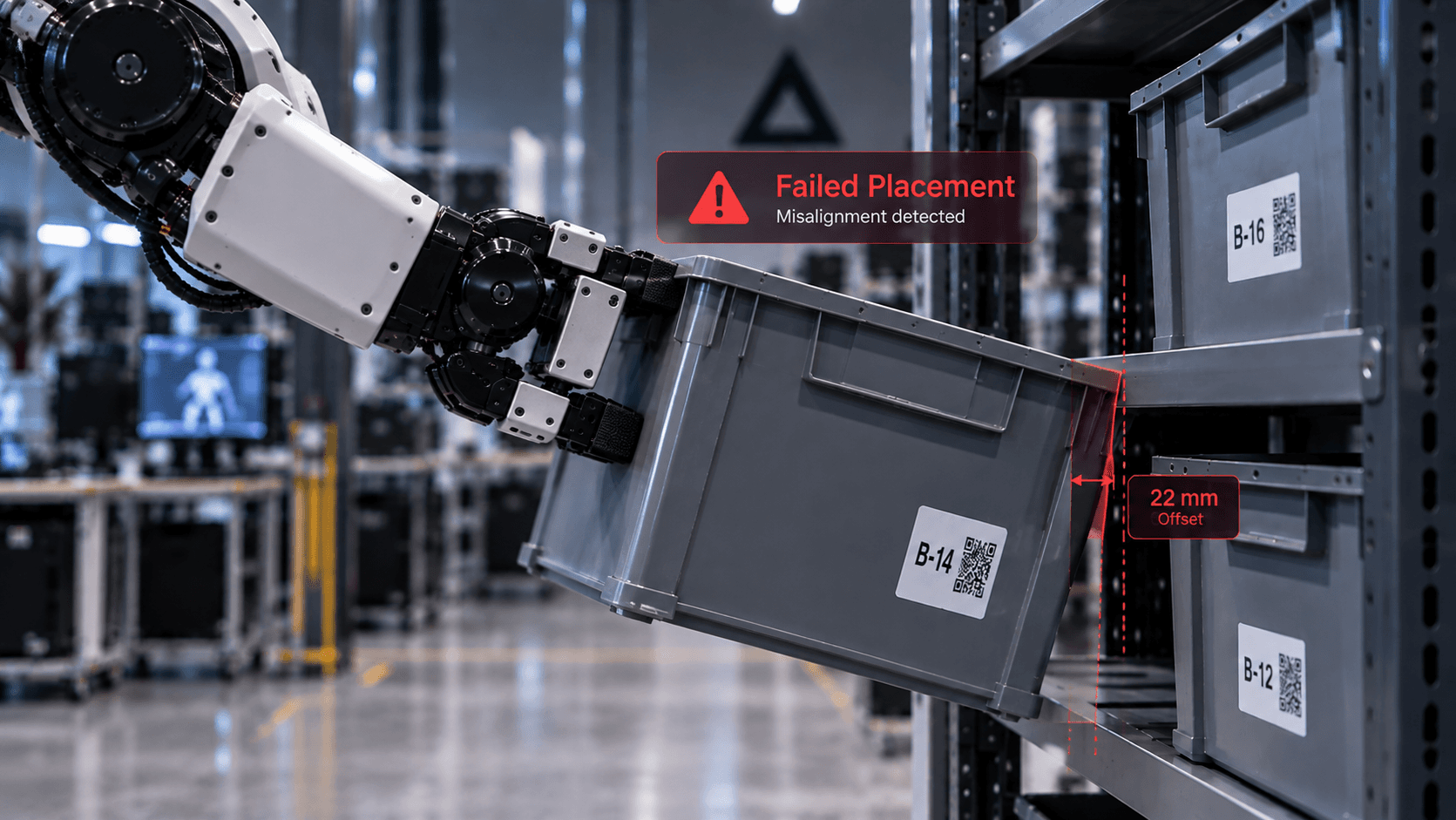
Data Insights
Reflective objects represent only 2.4% of training data. Increasing coverage may improve performance.
Recommendation
Collect 1,200 additional reflective-object manipulation episodes.
How it learns
- Correlates failure patterns with dataset composition
- Records proposed data interventions
- Measures model performance after intervention
- Improves future collection recommendations
Impact
63% → 79%
Model success rate
↓ 43%
Failure rate
+2.1×
Data efficiency
09 / Sentious Intelligence
The Compounding Loop
Every decision makes the next decision smarter.
- 01
- People
- Annotate, review, and provide feedback
- 02
- Agents
- Understand, recommend, and automate
- 03
- Decision Data
- Capture choices, corrections, and outcomes
- 04
- Learning
- Update policies, guidelines, and models
- 05
- Better Data
- Higher quality, greater coverage
- 06
- Better Models
- Improved real-world performance
- 07
- Real-World Impact
- More capable systems in the real world
A continuous cycle of improvement